
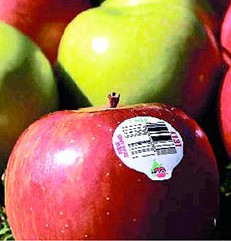
Look closely at recent supermarket coupons, and you may see some new markings on them near the traditional bar code: sets of neat black bars stacked in two rows.
The new symbols, called GS1 DataBars, can store more data than traditional bar codes, promising new ways for stores to monitor inventory and for customers to save money.
One use of the symbols will be in sophisticated coupon offers that combine deals on multiple products, said Jackie Broberg, who leads coupon control management at General Mills in Minneapolis.
A single coupon, for example, could offer discounts on three separate items like eggs, bacon and biscuits, all in one transaction.
Another use of the new symbols is already helping to streamline operations for a common speed bump in the checkout process: loose produce.
During the past three years, for example, the Loblaw Companies, the big Canadian supermarket chain, has gradually switched to scannable, miniaturized DataBar labels pasted onto some fruits and vegetables.
Instead of entering a 4- or 5-digit number to look up a price, cashiers scan the DataBars on the produce, said Eric Biddiscombe, senior director of planning in Cambridge, Ontario.
“It’s quicker and far more accurate,” Biddiscombe said. But the system is valuable not only for speeding checkout times and for keeping track of different varieties of bulk vegetables and fruits sold.
It also prevents another checkout problem: cashiers mistaking organic vegetables for less expensive, conventionally grown ones, and ringing them up for the lower price.
Photo by The New York Times.