
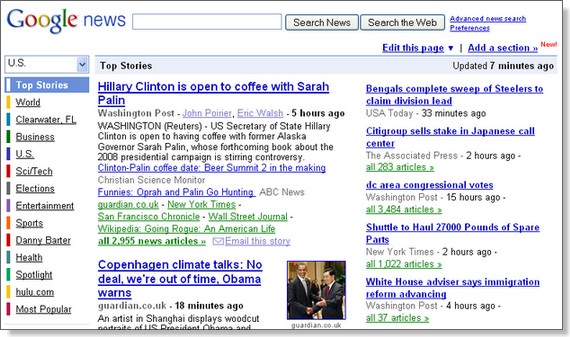
Fast Company reports that it’s called “hNews,” and it could provide instantaneous context for any online news article.
HNews is the product of a project overseen by none other than Sir Tim Berners-Lee, the physicist who created the first Web protocol in 1990 and is widely regarded as the “inventor” of the World Wide Web. The Columbia Journalism Review explains how hNews would change online news thusly:
Imagine this: you visit one of your favorite news sites and the homepage displays a notification that an article you read yesterday has been updated with new information, and a story you read last week has been corrected. The notification enables you to click on a link and read the correction, or to be taken to the updated story.
After checking those items, you continue reading articles on the site, and each story includes a box of information explaining the type of sourcing used within the story (anonymous, etc.), as well as a link to the organization’s relevant policies and standards. If you spot an error in an article, you can easily submit a request for correction via that same info-box. And if the article is corrected, you’ll receive a notification during a future visit to the site.
The purpose of hNews, says its creators, is twofold: its first goal is to enable media outlets to “tag” their sources and make them searchable and dynamic. Its second is to make that information readable by computers, an effort more broadly known as “semantic Web.” The thinking goes that if computers can recognize and “read” the content of a website, instead of just browsing for keywords, it will enable more accurate searching.
Photo by Google.